A damaging supercell hailstorm on 6 July 2023 in Vitoria-Gasteiz, the Basque Country
Joseba Egaña
CORRESPONDING AUTHOR
Basque Meteorology Agency (EUSKALMET), Vitoria-Gasteiz, Basque Country, Spain
Jon Ander Arrillaga
Basque Meteorology Agency (EUSKALMET), Vitoria-Gasteiz, Basque Country, Spain
Santiago Gaztelumendi
Basque Meteorology Agency (EUSKALMET), Vitoria-Gasteiz, Basque Country, Spain
Related authors
Santiago Gaztelumendi, Joseba Egaña, and José Antonio Aranda
Adv. Sci. Res., 22, 1–8, https://doi.org/10.5194/asr-22-1-2025, https://doi.org/10.5194/asr-22-1-2025, 2025
Short summary
Short summary
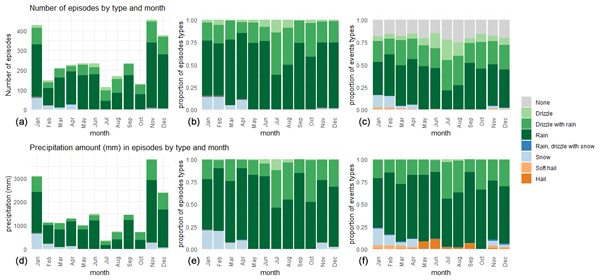
Measurements are crucial for understanding atmospheric processes, water cycles, and climate. This paper focuses on optical disdrometer measurements to study precipitation complexity at the surface, analyzing precipitation episodes in the Basque Country. Using 1-minute disdrometer data, key characteristics like duration, intensity, particle count, and rain amount are examined for episodes previously established through aggregation of minute data.
Santiago Gaztelumendi, Joseba Egaña, Miriam Ruiz, and Eguzkiñe Iturrioz
Adv. Sci. Res., 21, 41–48, https://doi.org/10.5194/asr-21-41-2024, https://doi.org/10.5194/asr-21-41-2024, 2024
Short summary
Short summary
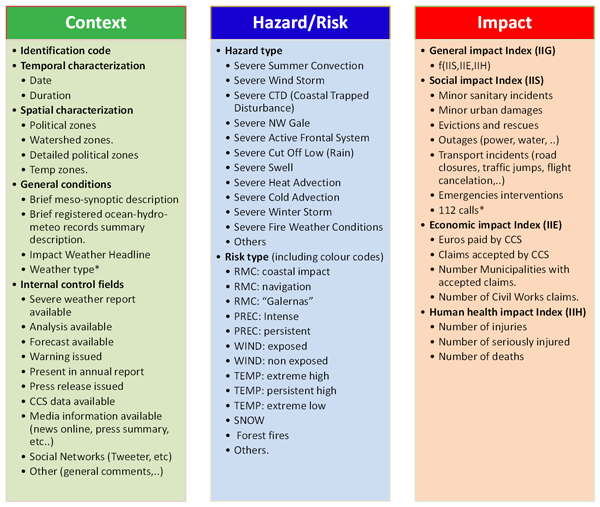
We presents the Basque Country Impact Weather Catalogue, recording detailed information on adverse weather events and their environmental impacts. It includes context, hazard/risk, and impact sections, utilizing data from Euskalmet, Emergency, Media, Insurance, etc. Standardized information enables qualitative and quantitative analysis feasibility for events spanning the 21st century. The paper details catalogue design, structure, and implementation steps.
Santiago Gaztelumendi, Joseba Egaña, and Kepa Otxoa de Alda
Adv. Sci. Res., 21, 27–39, https://doi.org/10.5194/asr-21-27-2024, https://doi.org/10.5194/asr-21-27-2024, 2024
Short summary
Short summary
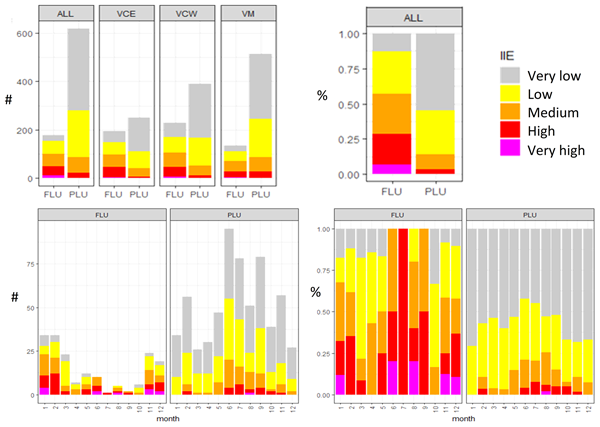
This study examines floods in the Basque Autonomous Community from 2000 to 2021, assessing damages, weather conditions, and other factors. It uses data from the Spanish Insurance Compensation Consortium and the AWS network, analyzing diverse datasets to extract indicators. Visual analytics are used for analysis and characterization.
Santiago Gaztelumendi, Joseba Egaña, and José Antonio Aranda
Adv. Sci. Res., 22, 1–8, https://doi.org/10.5194/asr-22-1-2025, https://doi.org/10.5194/asr-22-1-2025, 2025
Short summary
Short summary
Measurements are crucial for understanding atmospheric processes, water cycles, and climate. This paper focuses on optical disdrometer measurements to study precipitation complexity at the surface, analyzing precipitation episodes in the Basque Country. Using 1-minute disdrometer data, key characteristics like duration, intensity, particle count, and rain amount are examined for episodes previously established through aggregation of minute data.
Maialen Martija-Díez, Roberto Hernández, José Daniel Gómez de Segura, and Santiago Gaztelumendi
Adv. Sci. Res., 21, 49–61, https://doi.org/10.5194/asr-21-49-2024, https://doi.org/10.5194/asr-21-49-2024, 2024
Short summary
Short summary
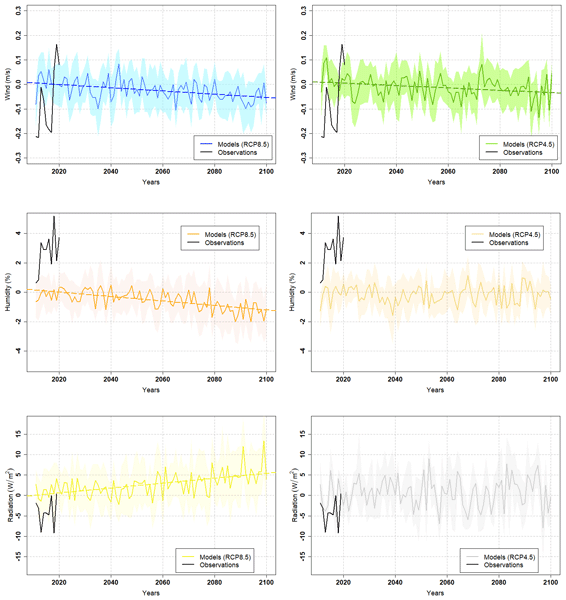
This paper explores the projected changes on wind, relative humidity and solar radiation in future scenarios for the Basque Country. This work is part of the UrbanKlima2050 initiative and aims to provide a more comprehensive characterization of future climate change impacts in the region, and thus, improve the resiliency of the territory. The main results show a decrease in both wind and relative humidity by the end of this century, while solar radiation tends to increase.
Santiago Gaztelumendi, Joseba Egaña, Miriam Ruiz, and Eguzkiñe Iturrioz
Adv. Sci. Res., 21, 41–48, https://doi.org/10.5194/asr-21-41-2024, https://doi.org/10.5194/asr-21-41-2024, 2024
Short summary
Short summary
We presents the Basque Country Impact Weather Catalogue, recording detailed information on adverse weather events and their environmental impacts. It includes context, hazard/risk, and impact sections, utilizing data from Euskalmet, Emergency, Media, Insurance, etc. Standardized information enables qualitative and quantitative analysis feasibility for events spanning the 21st century. The paper details catalogue design, structure, and implementation steps.
Santiago Gaztelumendi, Joseba Egaña, and Kepa Otxoa de Alda
Adv. Sci. Res., 21, 27–39, https://doi.org/10.5194/asr-21-27-2024, https://doi.org/10.5194/asr-21-27-2024, 2024
Short summary
Short summary
This study examines floods in the Basque Autonomous Community from 2000 to 2021, assessing damages, weather conditions, and other factors. It uses data from the Spanish Insurance Compensation Consortium and the AWS network, analyzing diverse datasets to extract indicators. Visual analytics are used for analysis and characterization.
Cited articles
Battaglioli, F., Groenemeijer, P., Púčik, T., Taszarek, M., Ulbrich, U., and Rust, H.: Modeled Multidecadal Trends of Lightning and (Very) Large Hail in Europe and North America (1950–2021), J. Appl. Meteor. Climatol., 62, 1627–1653, https://doi.org/10.1175/JAMC-D-22-0195.1, 2023.
Bunkers, M. J., Klimowski, B. A., Zeitler, J. W., Thompson, R. L., and Weisman, M. L.: Predicting Supercell Motion Using a New Hodograph Technique, Weather Forecast., 15, 61–79, https://doi.org/10.1175/1520-0434(2000)015<0061:PSMUAN>2.0.CO;2, 2000.
Calvo-Sancho, C., Díaz-Fernández, J., Martín, Y., Bolgiani, P., Sastre, M., González-Alemán, J. J., Santos-Muñoz, D., Farrán, J. I., and Martín, M. L.: Supercell convective environments in Spain based on ERA5: hail and non-hail differences, Weather Clim. Dynam., 3, 1021–1036, https://doi.org/10.5194/wcd-3-1021-2022, 2022.
Castro, A., Sánchez, J. L., and Fraile, R.: Statistical comparison of the properties of thunderstorms in different areas around the Ebro Valley (Spain), Atmos. Res., 28, 237–257, https://doi.org/10.1016/0169-8095(92)90011-X, 1992.
Dennis, E. J. and Kumjian, M. R.: The Impact of Vertical Wind Shear on Hail Growth in Simulated Supercells, J. Atmos. Sci., 74, 641–663, https://doi.org/10.1175/JAS-D-16-0066.1, 2017.
Egaña, J., Gaztelumendi, S., Pierna, D., and Principe, O.: A study of convective severe storms in Basque Country during XXI century, 9th European Conference on Severe Storms, 18–22 September 2017, ECSS2017-126, https://doi.org/10.13140/RG.2.2.19434.85444, 2017a.
Egaña, J., Principe, O., Pierna, D., and Gaztelumendi, S.: A study of 13 september 2016 storm event in Basque Country, 9th European Conference on Severe Storms, 18–22 September 2017, ECSS2017-124-1, https://doi.org/10.13140/RG.2.2.29818.36801, 2017b.
Feldmann, M., Blanc, M., Brennan, K. P., Thurnherr, I, Velasquez, P., Martius, O., and Schär, C.: European supercell thunderstorms – A prevalent current threat and an increasing future hazard, Sci. Adv., 11, 35, https://doi.org/10.1126/sciadv.adx0513, 2025.
Friedrich, K., Higgins, S., Masters, F. J., and López, C. R.: Articulating and Stationary PARSIVEL Disdrometer Measurements in Conditions with Strong Winds and Heavy Rainfall, J. Atmos. Ocean. Tech., 30, 2063–2080, https://doi.org/10.1175/JTECH-D-12-00254.1, 2013.
Gaztelumendi, S., Egaña, J., Gelpi, I. R., Otxoa de Alda, K., Maruri, M., and Hernandez, R.: Use of Kapildui radar for analysis and surveillance in a storm case, in: Proceedings of Fifth European Conference on Radar in Meteorology and Hydrology, ERAD 2008, Helsinki, Finland, 30 June–4 July 2008, https://doi.org/10.13140/RG.2.2.24679.73125, 2008.
Gaztelumendi, S., Egaña, J., Pierna, D., Gelpi, I. R., Hernández, R., López, J., and Otxoa de Alda, K.: A case study of convective severe storms episode in Basque Country, 6th European Conference on Severe Storms, 3–7 October 2011, Palma de Mallorca, Spain, https://www.essl.org/ECSS/2011/programme/abstracts/162.pdf (last access: 23 January 2026), 2011.
Gaztelumendi, S., Egaña, J., Etxezarreta, A., Maruri, M., and Aranda, J. A.: Analysis of a tornado event in Basque Country, 16th EMS Annual Meeting and 11th European Conference on Applied Climatology, 12–16 September 2016, Trieste, Italy, EMS2016-317, https://doi.org/10.13140/RG.2.2.27194.31685, 2016.
Gaztelumendi, S., Otxoa de Alda, K., Hernández, R., Maruri, M., Aranda, J. A., and Anitua, P.: The Basque Automatic Weather Station Mesonetwork in perspective, in: Proceedings 2018 WMO/CIMO Technical Conference on Meteorological and Environmental Instruments and Methods of Observation (CIMO-TECO 2018), 8–11 October 2018, Amsterdam, the Netherlands, P3(50), https://doi.org/10.25607/OBP-125, 2018.
Gaztelumendi, S., Egaña, J., and Aranda, J. A.: A study of a tornado event in Basque Country: The 4th July 2018 case, European Conference on Severe Storms, 4–8 September 2019, Krakow, Poland, ECSS2019-38-1, https://doi.org/10.13140/RG.2.2.20693.14560, 2019.
Gaztelumendi, S., Otxoa de Alda, K., Ruiz, R., Orue, J., Egaña, J., Maruri, M., and Aranda, J. A.: High temporal resolution monitoring of precipitation in the Basque Country, EMS Annual Meeting 2022, Bonn, Germany, 5–9 September 2022, EMS2022-584, https://doi.org/10.5194/ems2022-584, 2022.
Gaztelumendi, S., Egaña, J., Ruiz, M., and Iturrioz, E.: The Basque Impact Weather Catalogue, Adv. Sci. Res., 21, 41–48, https://doi.org/10.5194/asr-21-41-2024, 2024.
Gelpi, I. R., Arrillaga, J. A., Egaña, J., and Gaztelumendi, S.: Understanding the role of synoptic and mesoescalar models in the context of severe weather forecasts in Basque Country , EMS Annual Meeting 2024, Barcelona, Spain, 1–6 September 2024, EMS2024-470, https://doi.org/10.5194/ems2024-470, 2024.
Grell, G. A. and Freitas, S. R.: A scale and aerosol aware stochastic convective parameterization for weather and air quality modeling, Atmos. Chem. Phys., 14, 5233–5250, https://doi.org/10.5194/acp-14-5233-2014, 2014.
Hernandez, R., Otxoa de Alda, K., Gomez de Segura, J. D., and Gaztelumendi, S.: Processing of historical data from the Basque AWS network, in: Proceedings WMO/CIMO TECO-2022 (WMO/CIMO Technical Conference on Meteorological and Environmental Instruments and Methods of Observation), 10–13 October 2022, Paris, France, CIMO TECO-2022, P4(10), https://library.wmo.int/idurl/4/41688 (last access: 23 January 2026), 2022.
Homeyer, C. R., Bunkers, M. J., Allen, J. T., and Murphy, A. M.: United States Supercell Storms and Their Severity: A 14-Year Radar-Based Climatology, J. Appl. Meteor. Climatol., 64, 959–970, https://doi.org/10.1175/JAMC-D-24-0185.1, 2025.
Johns, R. H. and Doswell, C.A: Severe local storms forecasting, Weather Forecast., 7, 588–612, https://doi.org/10.1175/1520-0434(1992)007<0588:SLSF>2.0.CO;2, 1992.
Markowski, P. and Richardson, Y.: Mesoscale Meteorology in Midlatitudes, Wiley-Blackwell, 430 pp., ISBN 978-0470742136, 2010.
Martín, Y., Cívica, M., and Pham, E.: Constructing a supercell database in Spain using publicly available two-dimensional radar images and citizen science, Ann. Am. Assoc. Geogr., 111, 1346–1366, https://doi.org/10.1080/24694452.2020.1812371, 2021.
Martín, M. L., Calvo-Sancho, C., Taszarek, M., González-Alemán, J. J., Montoro-Mendoza, A., Díaz-Fernández, J., Bolgiani, P., Sastre, M., and Martín, Y.: Major role of marine heatwave and anthropogenic climate change on a Giant hail Event in Spain, Geophys. Res. Lett., 51, 6, https://doi.org/10.1029/2023GL107632, 2024.
National Centers for Environmental Prediction (NCEP): Global Forecast System (GFS), https://www.emc.ncep.noaa.gov/emc/pages/numerical_forecast_systems/gfs/documentation.php, last access: 20 November 2025.
Púčik, T., Groenemeijer, P., Rýva, D., and Kolář, M.: Proximity soundings of severe and nonsevere thunderstorms in Central Europe, Mon. Weather Rev, 143, 4805–4821, https://doi.org/10.1175/MWR-D-15-0104.1, 2015.
Púčik, T., Castellano, C., Groenemeijer, P., Kühne, T., Rädler, A.T., Antonescu, B., and Faust, E.: Large hail incidence and its economic and societal impacts across Europe, Mon. Weather Rev., 147, 3901–3916, https://doi.org/10.1175/MWR-D-19-0204.1, 2019.
Quirantes, J. A., Riesco Martín, J., and Nuñez Mora, J. A.: Características básicas de las supercélulas en España, Agencia Estatal de Meteorología (AEMET), https://doi.org/10.31978/281-14-008-X, 2014.
Quirantes, J. A., Bello-Millán, F. J., Cívica, M., and Palacios García, J.: Caracterización del ambiente convectivo en la formación de supercélulas en España en el periodo 2017–2021, 30 Nota Técnica 38, Agencia Estatal de Meteorología (AEMET), https://doi.org/10.31978/666-22-010-9, 2022.
Schultz, D. M.: How to research and write effective case studies in meteorology, Electronic J. Severe Storms Meteor., 5, 1–18, https://doi.org/10.55599/ejssm.v5i2.22, 2010.
Skamarock, W. C., Klemp, J. B., Dudhia, J., Gill, D. O., Liu, Z., Berner, J., Wang, W., Powers, J. G., Duda, M. G., Barker, D. M., and Huang, X. Y.: A Description of the Advanced Research WRF Version 4, NCAR Tech. Note NCAR/TN-556+STR, 145 pp., https://doi.org/10.5065/1dfh-6p97, 2019.
Taszarek, M., Allen, J. T., Púčik, T., Hoogewind, K. A., and Brooks, H. E.: Severe convective storms across Europe and the United States. Part II: ERA5 environments associated with lightning, large hail, severe wind, and tornadoes, J. Climate, 33, 10263–10286, https://doi.org/10.1175/JCLI-D-20-0346.1, 2020.
Tokay, A., Wolff, D. B., and Petersen, W. A.: Evaluation of the new version of the laser-optical disdrometer, OTT PARSIVEL2, J. Atmos. Ocean. Tech., 31, 1276–1288, https://doi.org/10.1175/JTECH-D-13-00174.1, 2014.
Weisman, M. L. and Klemp, J. B.: The structure and classification of numerically simulated convective storms in directionally varying wind shears, Mon. Weather Rev., 112, 2479–2498, https://doi.org/10.1175/1520-0493(1984)112<2479:TSACON>2.0.CO;2, 1984.
Short summary
On 6 July 2023, a severe hailstorm hit Vitoria-Gasteiz, caused by a supercell. Active cells moved southwest to northeast, with some shifting west-east. The storm, with radar reflectivities up to 65 dBz, brought intense showers and hail up to 5 cm in diameter. It caused injuries, vehicle damage and urban flooding. This study analyzes the storm’s conditions and surface effects using different data.
On 6 July 2023, a severe hailstorm hit Vitoria-Gasteiz, caused by a supercell. Active cells...