Articles | Volume 22
https://doi.org/10.5194/asr-22-103-2025
15 Dec 2025
 | 15 Dec 2025

Response of the atmospheric boundary layer to SST variability in a coupled simulation in the Atlantic trades

Alessandro Storer, Matteo Borgnino, Agostino Niyonkuru Meroni, Fabien Desbiolles, Carlos Conejero, Lionel Renault, and Claudia Pasquero

Related authors

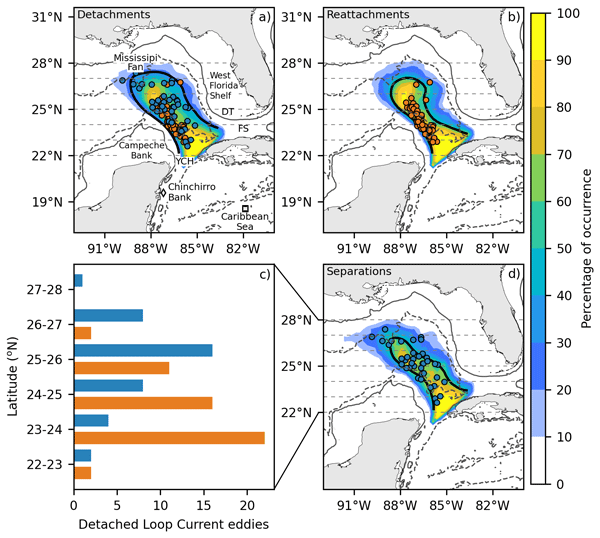
The role of cyclonic eddies in the detachment and separation of Loop Current eddies
Marco Larrañaga, Julien Jouanno, Eric P. Chassignet, Giovanni Durante, Ilkyeong Ma, Julio Sheinbaum, and Lionel Renault
EGUsphere, https://doi.org/10.5194/egusphere-2025-5574,https://doi.org/10.5194/egusphere-2025-5574, 2025
This preprint is open for discussion and under review for Ocean Science (OS).
Short summary
CYCLOPs: a Unified Framework for Surface Flux-Driven Cyclones Outside the Tropics
Kerry Emanuel, Tommaso Alberti, Stella Bourdin, Suzana J. Camargo, Davide Faranda, Emmanouil Flaounas, Juan Jesus Gonzalez-Aleman, Chia-Ying Lee, Mario Marcello Miglietta, Claudia Pasquero, Alice Portal, Hamish Ramsay, Marco Reale, and Romualdo Romero
Weather Clim. Dynam., 6, 901–926, https://doi.org/10.5194/wcd-6-901-2025,https://doi.org/10.5194/wcd-6-901-2025, 2025
Short summary
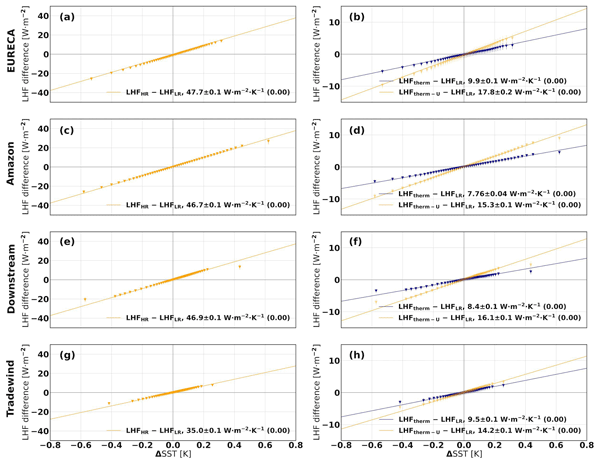
On the Mechanisms Driving Latent Heat Flux Variations in the Northwest Tropical Atlantic: a Modeling Approach
Pablo Fernández, Sabrina Speich, Carlos Conejero, Lionel Renault, Fabien Desbiolles, Claudia Pasquero, and Guillaume Lapeyre
EGUsphere, https://doi.org/10.5194/egusphere-2025-3746,https://doi.org/10.5194/egusphere-2025-3746, 2025
Short summary
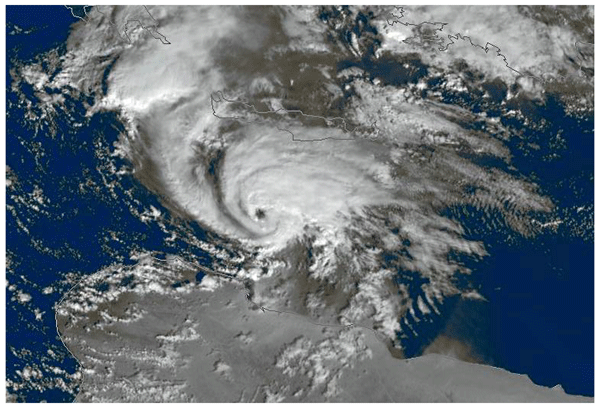
Environmental Characteristics Associated with the Tropical Transition of Mediterranean Cyclones
Lisa Bernini, Leone Cavicchia, Fabien Desbiolles, Enrico Scoccimarro, and Claudia Pasquero
EGUsphere, https://doi.org/10.5194/egusphere-2025-3861,https://doi.org/10.5194/egusphere-2025-3861, 2025
Short summary
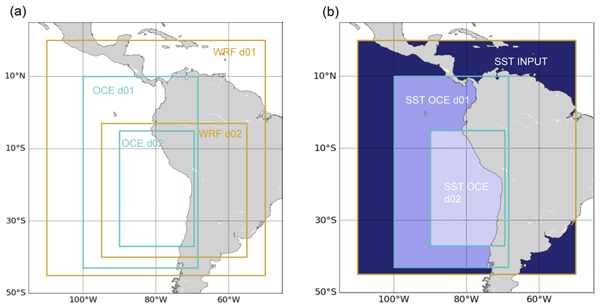
An updated non-intrusive, multi-scale, and flexible coupling interface in WRF 4.6.0
Sébastien Masson, Swen Jullien, Eric Maisonnave, David Gill, Guillaume Samson, Mathieu Le Corre, and Lionel Renault
Geosci. Model Dev., 18, 1241–1263, https://doi.org/10.5194/gmd-18-1241-2025,https://doi.org/10.5194/gmd-18-1241-2025, 2025
Short summary

Cited articles

Acquistapace, C., Meroni, A. N., Labbri, G., Lange, D., Späth, F., Abbas, S., and Bellenger, H.: Fast atmospheric response to a cold oceanic mesoscale patch in the north-western tropical Atlantic, Journal of Geophysical Research: Atmospheres, 127, e2022JD036799, https://doi.org/10.1029/2022JD036799, 2022. a, b
Auclair, F., Benshila, R., Bordois, L., Boutet, M., Brémond, M., Caillaud, M., Cambon, G., Capet, X., Debreu, L., Ducousso, N., Dufois, F., Dumas, F., Ethé, C., Gula, J., Hourdin, C., Illig, S., Jullien, S., Le Corre, M., Le Gac, S., Le Gentil, S., Lemarié, F., Marchesiello, P., Mazoyer, C., Morvan, G., Nguyen, C., Penven, P., Person, R., Pianezze, J., Pous, S., Renault, L., Roblou, L., Sepulveda, A., and Theetten, S.: Coastal and regional ocean community model, Zenodo [software], https://doi.org/10.5281/zenodo.11036115, 2022. a
Bony, S. and Dufresne, J.-L.: Marine boundary layer clouds at the heart of tropical cloud feedback uncertainties in climate models, Geophysical Research Letters, 32, L20806, https://doi.org/10.1029/2005GL023851, 2005. a
Borgnino, M., Desbiolles, F., Meroni, A., and Pasquero, C.: Lower Tropospheric Response to Local Sea Surface Temperature Anomalies: A Numerical Study in the EUREC 4 EUREC^4 A Region, Geophysical Research Letters, 52, e2024GL112294, https://doi.org/10.1029/2024GL112294, 2025. a, b, c, d, e, f, g, h, i, j, k, l, m
Download
Short summary
We looked into how a numerical experiment represents the interactions between the air and the sea at scales of about 100–1000 km. We found that slight changes in sea surface temperature (SST) drive dramatic modifications in evaporation rates from the sea surface. Cold sea patches tend to cool down the air and to keep moisture trapped within the lower atmospheric layers. Warmer SST, instead, makes them more buoyant and inflate with drier air, thus diluting moisture over thicker air layers.
Share